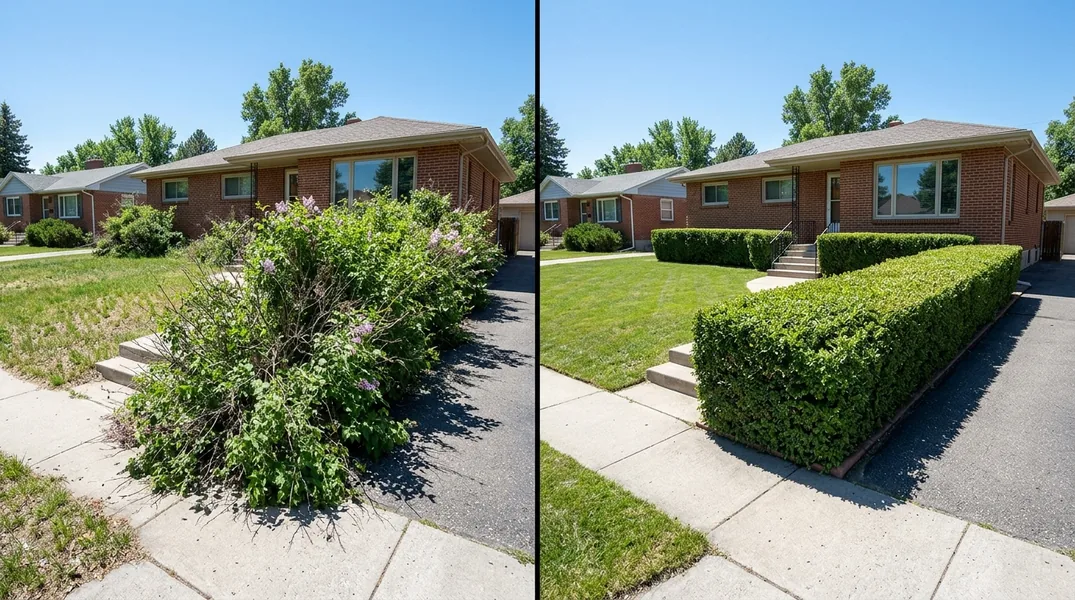
Tree Trimming vs Tree Removal: Understanding Your Options
When you notice a tree on your property showing signs of stress, disease, or damage, the first question most homeowners ask is simple: can it be saved? The answer often lies in understanding the difference between Tree Trimming & Pruning and Tree Removal. Not every struggling tree needs to come down. In many cases, professional pruning and trimming can restore health, improve structure, and extend the life of your shade tree by decades.
The decision between trimming and removal depends on several factors, including the tree's overall health, structural integrity, location, and the specific problems it's experiencing. A tree that appears dead or dangerous might actually have years of life left with proper care. Conversely, a tree that looks fine on the surface could be harboring internal decay that makes it a genuine safety hazard. Understanding these distinctions helps you make informed decisions that protect both your property and your investment in your landscape.
Signs Your Tree Might Be Saved with Professional Trimming
Many trees in Billings and surrounding areas show warning signs that alarm homeowners but don't necessarily mean the tree must be removed. Dead branches, for instance, are often a sign that a tree needs pruning rather than removal. When you see bare limbs mixed with healthy foliage, the tree is typically responding to stress by shedding weight. Professional Tree Trimming & Pruning removes these dead sections, improves air circulation, and allows the tree to redirect energy to healthy growth.
Overgrown or crowded canopies are another common issue that responds well to trimming. When branches cross, rub together, or create excessive shade, they compete for nutrients and create weak points prone to breakage. A experienced arborist can selectively remove branches to open the canopy, reduce wind resistance, and improve the tree's structural integrity. Trees with minor disease problems, slight lean, or branches rubbing against your home or power lines are also excellent candidates for trimming rather than complete removal. These interventions are typically more affordable than removal and preserve the shade, beauty, and environmental benefits your tree provides.
Hazard Tree Assessment in Billings: When Removal Becomes Necessary
Not every tree can or should be saved. A professional Tree Removal becomes the responsible choice when a tree poses genuine safety risks to your home, family, or neighbors. Hazard tree assessment is a critical evaluation process that determines whether a tree's structural problems or health issues make it dangerous. Trees with significant lean, large cavities in the trunk, extensive bark damage, or multiple major cracks may have compromised structural integrity that no amount of pruning can fix. Additionally, trees with advanced disease or pest damage affecting the main trunk often cannot be saved and should be removed to prevent the problem from spreading to other trees in your landscape.
Location matters significantly in hazard assessment. A tree that might be acceptable in an open field becomes a serious concern if it's positioned over your house, garage, or a neighbor's property. Trees near power lines, septic systems, or foundations present additional risks. Weather events are also a consideration. Billings experiences wind, ice storms, and heavy snow, which can stress weakened trees beyond their capacity. If a tree has lost more than 50 percent of its canopy, shows signs of root damage, or has been topped or severely damaged by previous storms, removal is often the safer and more practical option. A professional hazard tree assessment provides the objective evaluation you need to make the right decision.
The Health Assessment: How Arborists Decide Between Trimming and Removal
Professional arborists use a systematic approach to evaluate whether a tree should be trimmed and preserved or removed. They examine the tree's overall health by checking for signs of disease, pest damage, and vigor. A tree showing new growth, healthy foliage color, and active branch development has better chances of recovery with proper pruning. They also assess the extent of damage or disease. If problems are confined to branches or the outer canopy, trimming can remove affected areas and allow the tree to recover. However, if disease or damage has penetrated the main trunk or affected the majority of the canopy, the tree's ability to survive diminishes significantly.
Structural evaluation is equally important. Arborists look for branch attachment angles, the presence of included bark (a weakness in branch connections), and signs of internal decay. They may use specialized tools like resistographs or sonic tomography to assess wood density inside the trunk without causing damage. The tree's species and age also influence the decision. Some tree species are more resilient and recover well from pruning, while others decline rapidly once severely damaged. Young trees with problems are often worth saving because they have decades of potential growth ahead. Older trees with limited life expectancy might be candidates for removal if they're showing decline. This comprehensive evaluation ensures that the recommendation to trim or remove is based on objective facts rather than assumptions.
Benefits of Choosing Tree Trimming and Pruning When Possible
Preserving a tree through professional trimming offers numerous benefits beyond simply keeping the tree alive. Shade trees provide measurable economic value to your property, often increasing home value by three to fifteen percent depending on size and condition. They reduce energy costs by lowering summer temperatures around your home, improve air quality, support local wildlife, and enhance your landscape's aesthetic appeal. When a tree can be saved through proper pruning, you retain all these benefits while avoiding the expense and disruption of removal.
From a practical standpoint, Tree Trimming & Pruning is significantly less expensive than removal. Removing a large tree, hauling debris, and potentially grinding the stump represents a substantial investment. Professional trimming costs considerably less while achieving your goals of improving safety, health, and appearance. Regular pruning also prevents many problems from developing in the first place. Trees that receive proper maintenance throughout their lives are less likely to develop hazardous conditions, require fewer emergency interventions, and provide consistent benefits to your property for generations. By choosing trimming when appropriate, you're making a long-term investment in your landscape's health and your property's value.
Getting a Professional Hazard Tree Assessment Near Me
If you're uncertain whether your tree should be trimmed or removed, the best course of action is to schedule a professional evaluation. Billings Tree Service provides comprehensive hazard tree assessments that give you the information needed to make the right decision. Whether your tree can be saved through professional trimming or needs to be removed for safety reasons, we'll help you understand exactly why and what the next steps should be.
Don't guess about your tree's condition or rely on assumptions. Incorrect decisions can lead to either unnecessary removal of a salvageable tree or, worse, leaving a dangerous tree standing. Contact Billings Tree Service today for a free estimate and professional assessment. You can reach us at (406) 500-6212 to schedule your evaluation. Our team serves Billings, Laurel, Lockwood, Shepherd, and the surrounding areas, ready to help you preserve your shade trees or address hazardous conditions promptly and professionally.
Looking for a professional tree service contractor in Billings? Billings Tree Service responds fast for all your tree service needs.
Get a Free QuoteOur services: Tree Removal · Tree Trimming & Pruning · Stump Grinding